The Ultimate Guide to 3D Modeling and Rendering: Techniques, Tools, and Applications
The Ultimate Guide to 3D Modeling and Rendering: Techniques, Tools, and Applications
📌 Introduction
In this era of digital technology, 3D modeling and rendering are critical technologies that have been applied in most industries, including 🎮 entertainment, 🏗️ architecture, 🏭 product design, and 🏥 medical imaging. The ability to create real, three-dimensional objects and environments has transformed how business is done and how consumers interact with digital media. This article explains the fundamentals of 3D modeling and rendering, the tools available, and the broad range of applications that can benefit from these technologies.
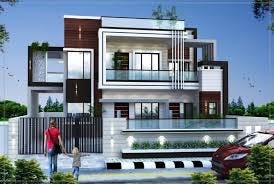
3D Modeling And Rendering:- Budget Friendly Solution
🖥️ What is 3D Modeling?
3D modeling is the process of creating a mathematical definition of a three-dimensional object using specialized software. The product, called a 3D model, can be rearranged, textured, and animated for any of a number of applications, ranging from 🎮 video games and 🎬 film to simulations and beyond.
3D Modeling And Rendering:- Budget Friendly Solution
📐 Types of 3D Modeling
🔺 Polygonal Modeling
- This technique involves creating 3D forms from polygons, which are triangles or quadrilaterals, most commonly.
- Polygons connect at vertices to create the surface of a 3D form.
- Commonly used in gaming and animation due to its efficiency in rendering graphics in real-time.
📏 NURBS Modeling
- NURBS mathematical curves-based modeling produces smooth surfaces.
- Used in high-precision engineering such as 🚗 automobile and ✈️ aircraft design.
🎨 Sculpting
- Computer sculpting software allows artists to shape 3D objects similar to modeling with clay.
- Frequently used in character design and fine modeling.
🏗️ Procedural Modeling
- Generates 3D models algorithmically rather than manually.
- Frequently used in terrain generation and building modeling.
⚙️ Boolean Modeling
- Combines multiple 3D objects by adding, subtracting, or intersecting them.
- Used for rapid design of intricate structures.
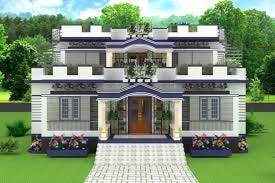
3D Modeling And Rendering:- Budget Friendly Solution
🎞️ What is 3D Rendering?
3D rendering is converting a 3D model to a 2D image with realistic illumination, texture, and effects. It is a critical process used to visualize and display 3D models completely.
3D Modeling And Rendering:- Budget Friendly Solution
🌟 Types of 3D Rendering
🎮 Real-Time Rendering
- Used in interactive software and games.
- Relies on GPUs for fast-rendering images with high frame rates.
🔦 Ray Tracing
- Simulates lighting behavior by tracing rays over the scene.
- Produces photorealistic images but is computationally intensive.
🖥️ Rasterization
- Projects 3D models onto pixels on a display screen.
- Common in real-time applications where speed takes priority.
💡 Global Illumination
- Adds indirect light, reflections, and shadows for realism.
- Typically used in architectural and cinematic rendering.
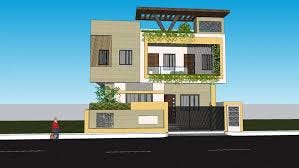
3D Modeling And Rendering:- Budget Friendly Solution
🛠️ Popular 3D Modeling and Rendering Software
🏗️ 3D Modeling Software
- Autodesk Maya — The standard tool for animation and visual effects.
- Blender — Open-source and widely used for modeling and rendering.
- ZBrush — Suitable for digital sculpting and character modeling.
- Cinema 4D — Suitable for motion graphics and visual effects.
- SolidWorks — Used in engineering and product design.
🎨 Rendering Software
- V-Ray — Offers world-class photorealistic rendering.
- Arnold — Used in Hollywood for high-end visual effects.
- Redshift — GPU-based for fast production time.
- OctaneRender — Offers realistic output through unbiased rendering.
- KeyShot — Has expertise in product visualization.
3D Modeling And Rendering:- Budget Friendly Solution
🏆 Applications of 3D Modeling and Rendering
🎮 1. Entertainment and Gaming
- Used in CGI movies, TV shows, and computer games.
- Enables creation of detailed worlds and characters.
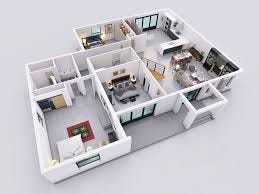
🏢 2. Architecture and Interior Design
- Architects envision building designs before construction.
- Enables virtual walkthroughs and real-life previews.
📦 3. Product Design and Manufacturing
- Enables prototyping and product visualization.
- Reduces the cost of physical mock-ups.
🏥 4. Medical Imaging and Healthcare
- Used in medical simulation and surgical planning.
- Enables the reconstruction of organs and body parts for research purposes.
🚗 5. Automotive and Aerospace Industries
- Assists in designing vehicles and aircraft with exact accuracy.
- Enhances aerodynamics through simulation testing.
🕶️ 6. Virtual Reality (VR) and Augmented Reality (AR)
- Builds interactive training and educational environments.
- Used in retail as virtual trials for products.
3D Modeling And Rendering:- Budget Friendly Solution
🔮 The Future of 3D Modeling and Rendering
The sector keeps changing with new developments in 🤖 AI, real-time rendering, and ☁️ cloud computing. AI-powered tools save time by automating modeling tasks, making workflows more efficient. Artists can tap into powerful computing capabilities from anywhere through cloud-based rendering. Real-time rendering is also advancing, merging the boundary between pre-rendered and interactive content.
🎯 Conclusion
3D modeling and rendering are revolutionizing various industries, from entertainment to engineering. With software and hardware constantly improving, the future of 3D graphics looks promising. As an artist, designer, or engineer, learning these tools can open up a world of opportunities in the digital realm.


Comments
Post a Comment